
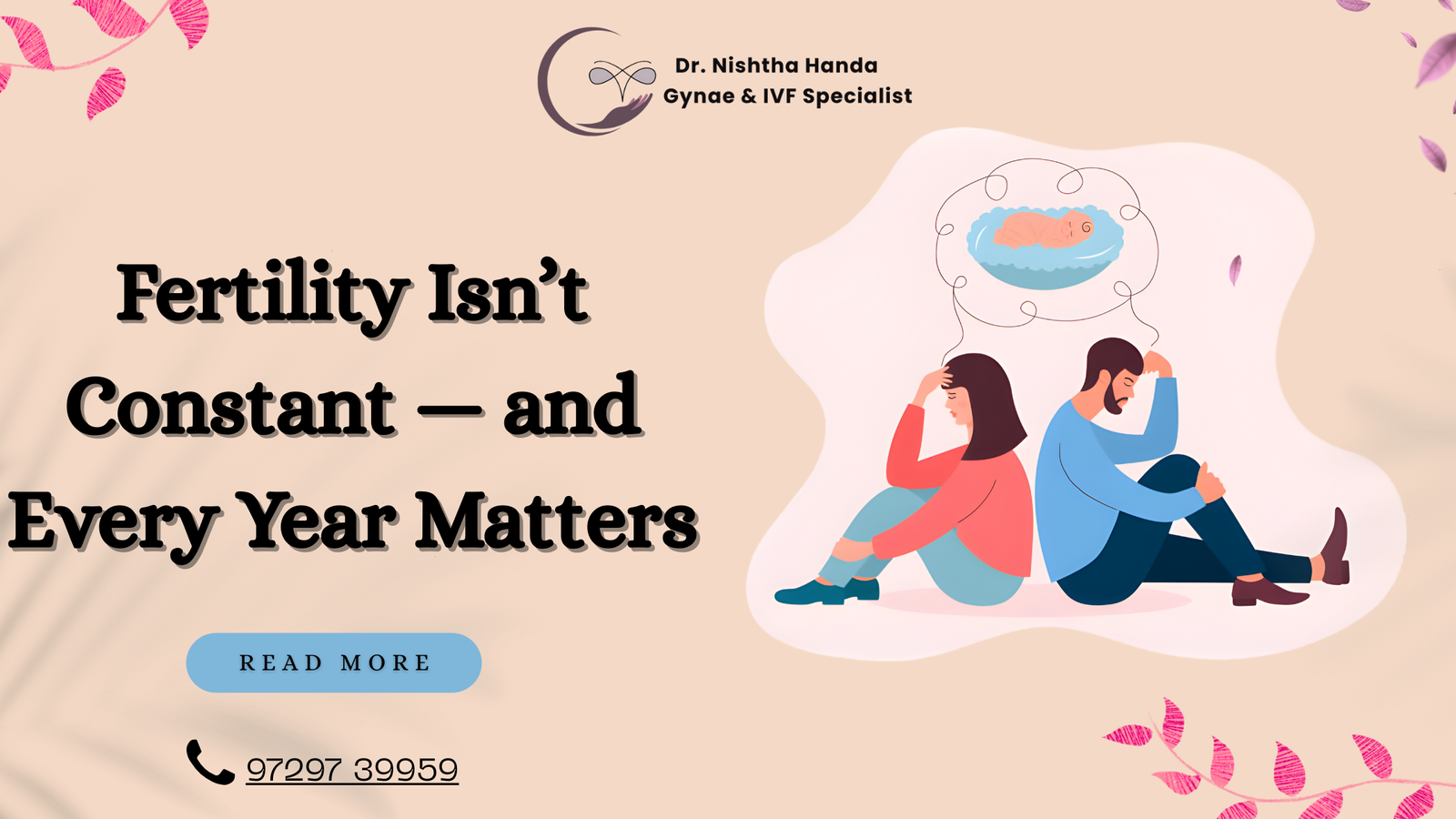
Fertility is often misunderstood as something that remains stable until a sudden decline later in life. In reality, fertility is dynamic and changes gradually over time. For both women and men, age plays a critical role in reproductive potential, and every passing year can influence the chances of natural conception as well as assisted reproductive success.
Understanding how fertility changes with age empowers individuals and couples to make informed reproductive decisions—whether they are planning a family now or considering fertility treatment options in the future.
Fertility refers to the natural ability to conceive and carry a pregnancy to term. It is influenced by multiple factors including age, hormonal balance, reproductive health, genetics, lifestyle, and underlying medical conditions.
Women are born with a finite number of eggs. This ovarian reserve declines steadily with age, both in quantity and quality.
While men continue to produce sperm throughout life, sperm quality declines with age.
Male age can also impact pregnancy outcomes and overall reproductive success.
Fertility does not decline overnight—it changes silently. Many people delay parenthood due to career, financial planning, or personal reasons, often assuming medical technology can overcome age-related fertility decline at any stage. While modern reproductive medicine offers remarkable solutions, biological limits still exist.
Delaying fertility evaluation or treatment can:
Early awareness allows timely action.
Advances in reproductive medicine have transformed fertility care. Treatments such as In Vitro Fertilization (IVF), IUI, and fertility preservation offer hope to individuals facing fertility challenges.
However, age remains one of the strongest predictors of success—even with IVF. Younger patients generally experience:
This is why consulting the Best IVF Clinic in Patel Nagar at the right time can significantly influence outcomes.
Medical professionals recommend:
Early consultation does not mean immediate treatment—it means understanding your fertility health.
While age is non-modifiable, lifestyle choices play a supportive role:
These factors can improve natural fertility and treatment outcomes.
For individuals not ready for parenthood, fertility preservation offers an option to safeguard reproductive potential.
These options are most effective when done at a younger age and should be discussed with a fertility specialist at a trusted center like the Best IVF Clinic in Patel Nagar.
Selecting the right clinic is crucial for accurate diagnosis, ethical treatment, and personalized care. A reputed fertility center offers:
The Best IVF Clinic in Patel Nagar focuses not only on treatment but also on awareness, early intervention, and patient-centered care.
Fertility is not constant—and time is a powerful factor. Every year matters because reproductive potential evolves with age, often without visible signs. Whether you are planning a family now or in the future, understanding your fertility health early allows better choices and improved outcomes.
Education, awareness, and timely medical guidance are the foundations of reproductive well-being. Consulting the Best IVF Clinic in Patel Nagar can help you navigate your fertility journey with confidence, clarity, and care.
1. Why does fertility decline with age?
Fertility declines due to a natural decrease in egg and sperm quality over time. Early evaluation at the Best IVF Clinic in Patel Nagar helps in understanding individual fertility status.
2. At what age should I consider fertility testing?
If you are under 35, consider testing after one year of trying; over 35, after six months. The Best IVF Clinic in Patel Nagar offers early fertility assessments.
3. Can IVF overcome age-related fertility issues?
IVF improves chances but success rates are higher at younger ages. Consulting the Best IVF Clinic in Patel Nagar early leads to better outcomes.
4. Does male age affect fertility?
Yes, increasing age can reduce sperm quality and affect pregnancy outcomes. The Best IVF Clinic in Patel Nagar evaluates both partners thoroughly.
5. Is fertility preservation useful for future planning?
Yes, egg and sperm freezing help preserve fertility potential. The Best IVF Clinic in Patel Nagar provides expert guidance on fertility preservation.

Dr. Nishtha Handa is a highly accomplished and compassionate Obstetrician, Gynaecologist, and Fertility Specialist based in New Delhi. She holds an MBBS and MS in Obstetrics & Gynaecology, along with a DNB, and has pursued advanced fellowships in Minimal Access Surgery and Reproductive Medicine. Trained at ABVIMS & Dr. Ram Manohar Lohia Hospital, Delhi, she is committed to providing holistic and evidence-based care to women across all stages of life.



.png)
.png)
.png)
.png)